

Audio Overview
Industry reports suggest that nearly six in ten manufacturers identify digital transformation as a top business priority, yet a significant portion still lack a formal strategy to put their plans into motion [1]. This reveals a critical challenge facing manufacturers and distributors: the data dilemma. In an era of unprecedented data collection, the competitive gap is no longer defined by who has the most information, but by who can act on it the fastest. Valuable insights from Enterprise Resource Planning (ERP) and Customer Relationship Management (CRM) systems often remain untapped, locked away by manual processes and disconnected platforms, leading to a state of data paralysis that directly impacts revenue and efficiency.
For many organizations, this problem feels familiar. They have invested heavily in systems to manage operations, inventory, and customer relationships, but the data these platforms generate sits in isolated silos. The promise of a data-driven business remains just out of reach, and the path forward is unclear. This article explores the roots of this common challenge and outlines a more agile, intelligent approach to marketing and sales for the modern manufacturer.
The High Cost of Data Paralysis
When data isn’t accessible or actionable, the consequences ripple across the business. Data paralysis is more than just a technological inconvenience; it creates tangible operational friction and missed financial opportunities.
Consider these common scenarios:
- Inefficient Sales Cycles: A salesperson preparing for a client meeting has no easy way to see that client’s recent service requests, payment history, or a summary of their last order—information stored in the ERP system. They enter the meeting without a complete picture, missing opportunities to address issues or propose relevant new products.
- Missed Marketing Opportunities: The marketing team wants to launch a campaign for a slow-moving product line. The inventory data lives in the ERP, while the customer contact list is in the CRM. The process of manually exporting, matching, and importing this data is so time-consuming that the campaign is delayed or abandoned altogether, leaving capital tied up in unsold stock.
- Poor Customer Experience: A long-time customer calls with a question about an order. The service agent, working only from the CRM, cannot see real-time shipping updates from the distribution centre’s logistics software. The resulting vague answer frustrates the customer and erodes trust.
These examples highlight a core issue: without a unified flow of information, every department is forced to operate with an incomplete view. This leads to wasted effort, slowed decision-making, and a disjointed experience for the very customers the business aims to serve.
The Integration Bottleneck
The root of the data dilemma lies in the historical separation of operational and commercial technology. ERP systems were built to manage the internal mechanics of a business: manufacturing, supply chain, and finance. CRM platforms, on the other hand, were designed to manage external interactions: sales, marketing, and customer service. While both are powerful, they rarely communicate effectively without deliberate integration.
This creates a significant bottleneck. To bridge the gap, employees resort to manual workarounds:
- Exporting data into spreadsheets for analysis.
- Manually cross-referencing customer lists between systems.
- Building one-off reports that are outdated the moment they are created.
These manual processes are not only slow and inefficient but also prone to human error. They prevent the business from scaling its operations and reacting to market changes in real time. The solution isn’t to work harder with the same broken processes; it’s to build a more intelligent foundation where systems communicate and data flows freely.
From Insight to Action with Intelligent Marketing
Overcoming data paralysis requires a framework that connects technology with business goals. This is the foundation of Intelligent Marketing, an approach that blends strategy, automation, Artificial Intelligence (AI), and human creativity to drive measurable growth. It moves organizations from simply collecting data to actively using it as a competitive advantage.
A critical first step is a strategic analysis of the data that already exists. For example, Goose Digital’s Data and Insights team often performs an opportunity analysis on a client’s existing ERP and CRM data. By identifying patterns and building customer segments strategically aligned to business growth plans, they help clients move from inefficient “batch and blast” communications to highly targeted and personalized strategies. This not only improves engagement but does so without inflating the marketing budget.
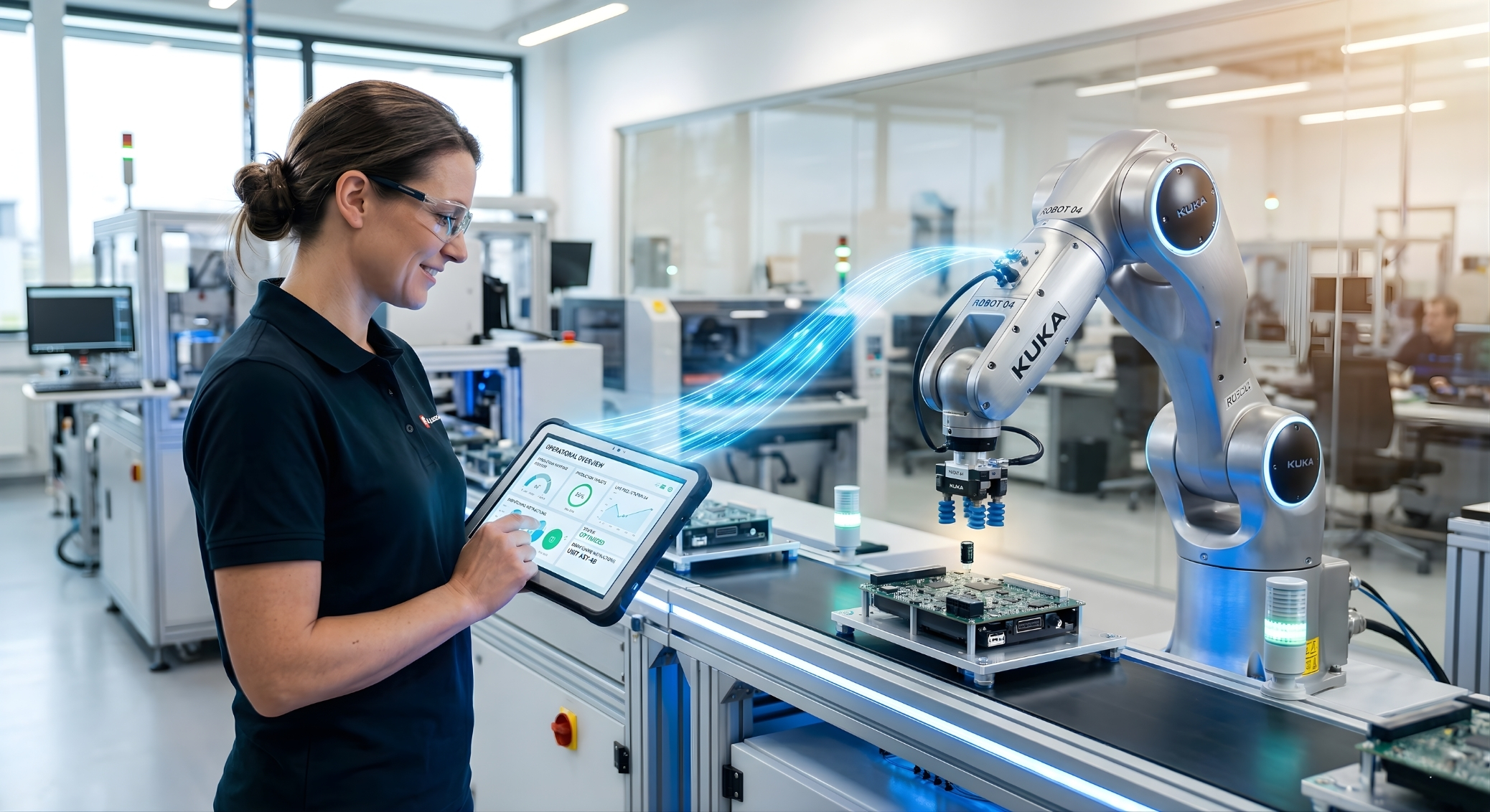
Once the strategy is clear, automation and AI can be deployed to execute it at scale. By integrating the ERP and CRM, an organization can create automated workflows that were previously impossible. Imagine a system where a large order placed in the ERP automatically triggers a personalized thank-you email from the CRM, or where a customer’s declining purchase frequency automatically enrolls them in a re-engagement campaign. This is how data becomes an active participant in growing the business.
The Evolving Role of AI in Manufacturing
Many business leaders hear “AI” and think of complex dashboards and predictive reports. While traditional AI is excellent at telling you there’s a problem, for instance, identifying a customer segment with a high probability of churn, it often stops there, leaving the team to figure out the solution.
The next evolution is what some call “Agentic AI,” where intelligent systems are empowered to not only identify issues but also take action to solve them while your team focuses on higher-value work. In a manufacturing context, this could look like:
- Automated E-commerce Promotions: An AI agent monitors inventory data in the ERP. When it detects an overstock of a particular product, it automatically launches a targeted promotional campaign to the most likely buyers in the CRM and reduces the price on the e-commerce platform.
- Proactive Sales Enablement: An agent analyzes customer purchase history and flags accounts that are ideal candidates for an upsell to a new, more profitable product line. It then automatically creates a task for the account manager in the CRM, complete with a recommended script and product information.
- Scalable Customer Communications: An AI-powered system can personalize communications for thousands of customers simultaneously, sending timely maintenance reminders, order status updates, or new product announcements based on each customer’s unique history.
This level of automation allows manufacturers and distributors to do more with less, increasing the quantity and quality of their marketing and sales efforts without a proportional increase in headcount or costs.
As manufacturers face increasing pressure to innovate, the ability to turn data into decisive action will separate the leaders from the laggards. The technology and strategies to solve the data dilemma are no longer theoretical; they are practical tools for building a more resilient, efficient, and profitable business. The future of the industry belongs to those who can connect their systems, automate their processes, and intelligently engage their customers.
The Goose Digital Advantage
Goose Digital specializes in helping manufacturing and distribution companies unlock the value hidden in their data. If you are ready to move from insight to action and build a more efficient, revenue-focused marketing engine, we invite you to connect with our team.
Contact Goose Digital today to get a free assessment of your marketing needs.
Sources
BDO, “2023 Manufacturing CFO Outlook Survey,” as cited in IndustryWeek.
MuleSoft, “2022 Connectivity Benchmark Report.”
McKinsey & Company, “The data-driven enterprise of 2025.”
Deloitte, “The smart factory: Responsive, adaptive, connected manufacturing.”
Content Integrity
This article was generated with the assistance of AI and edited by a human team member.