Audio Overview
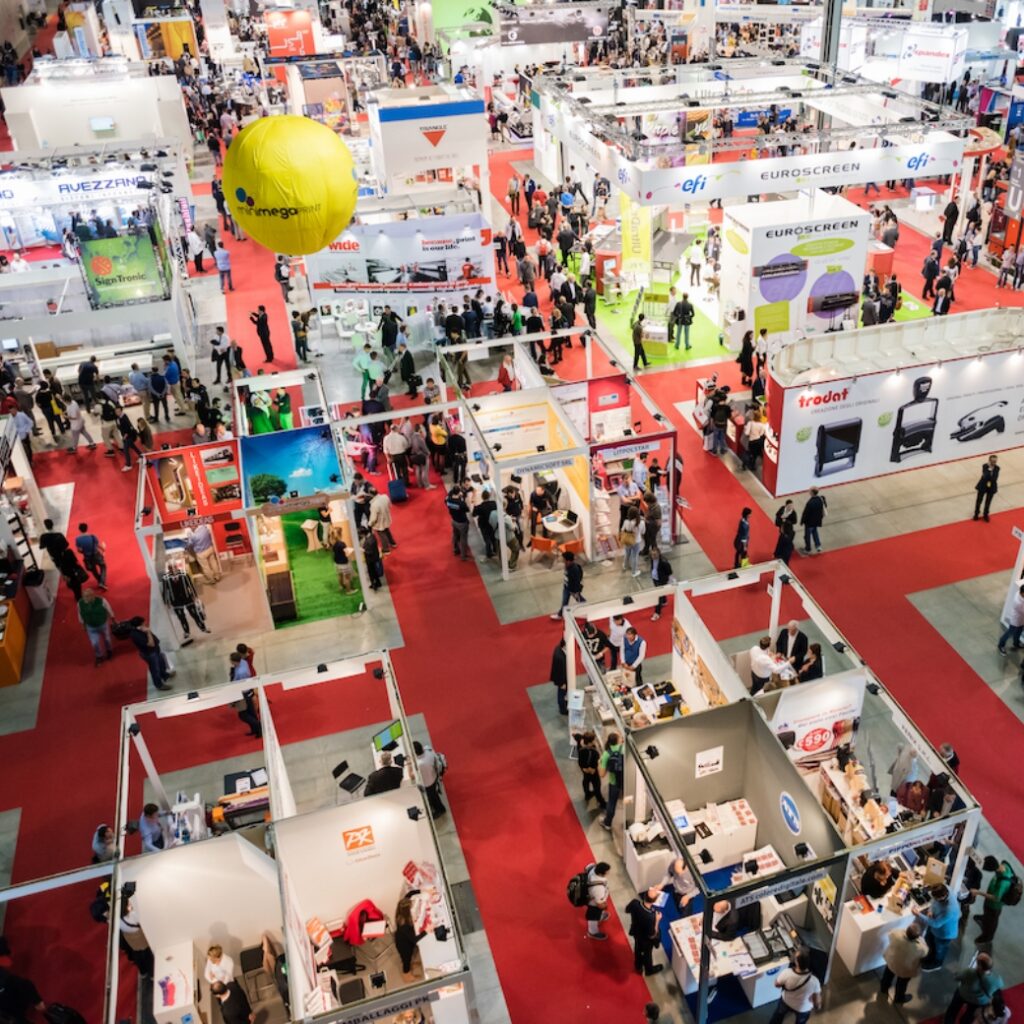
Many industrial manufacturers spend hundreds of thousands of dollars designing, transporting, and staffing trade show booths, only to leave their success entirely to the whims of random exhibition floor traffic.
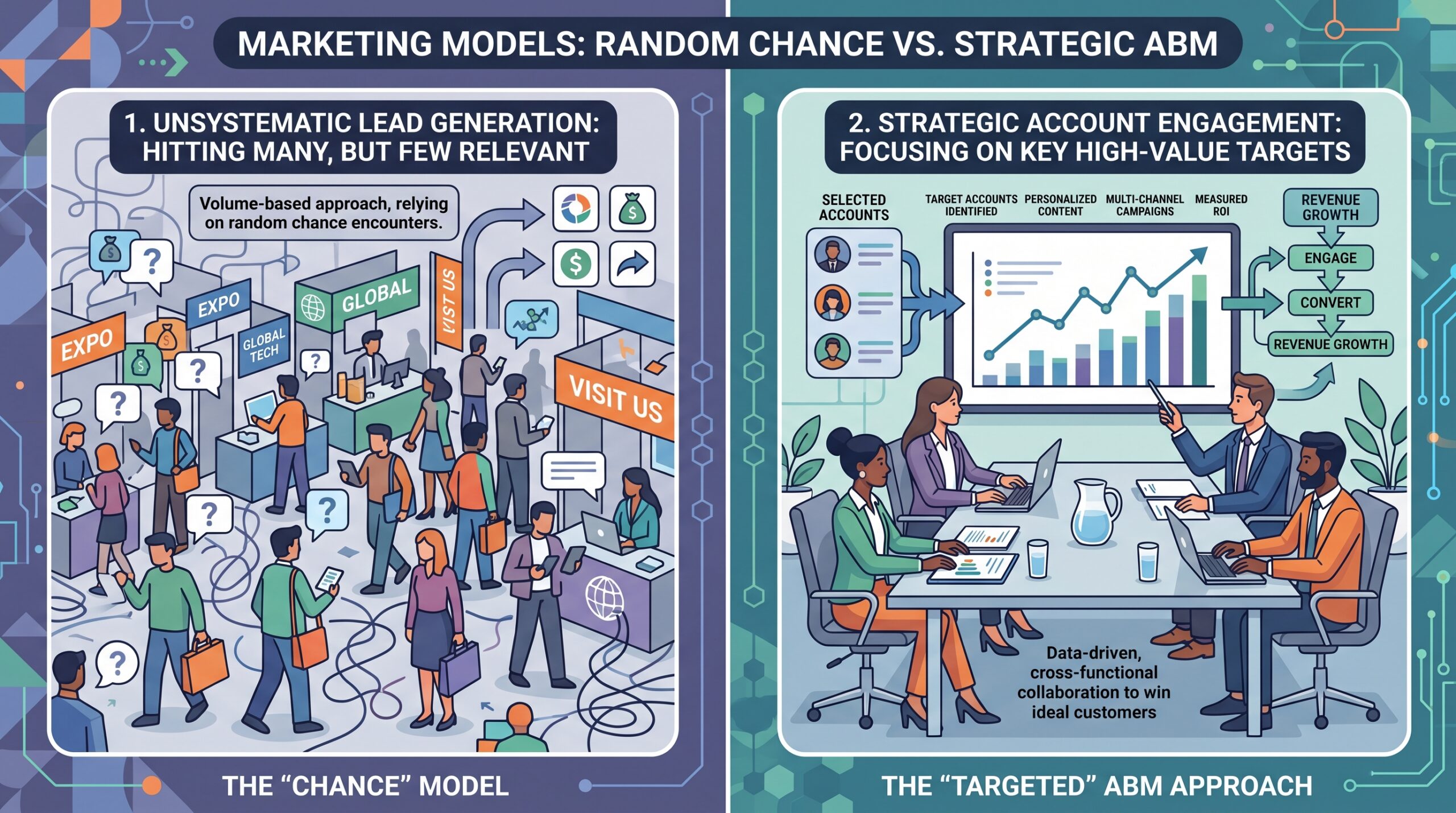
The traditional trade show model is often treated as a passive waiting game. Exhibitors set up physical displays, showcase machinery, and hope the right decision-makers walk by. Modern industrial purchasing paths, however, do not operate on chance. They are highly research-intensive and involve a complex, multi-stakeholder committee of engineers, operations managers, and procurement professionals. This is where Account-Based Marketing (ABM), a strategy where marketing and sales teams collaborate to target specific, high-value accounts, becomes essential. Rather than casting a wide net, ABM concentrates resources on engaging key prospects before the event begins.
According to research from the Center for Exhibition Industry Research (CEIR), up to 76% of trade show attendees arrive with a pre-planned agenda. If an organization is not on their schedule before the doors open, it is actively competing for leftover, fragmented attention. To capture maximum return on investment (ROI), the financial gain relative to the cost of the event, manufacturers must treat events as integrated milestones within a larger, digitally driven outreach program. For those looking to optimize their offline presence, learning how to pivot your event trade show-heavy marketing program into a multi-channel digital model is the first step.
Building Momentum with Tiered Account-Based Marketing
To ensure high-value target companies prioritize a booth visit, marketing teams should execute a tiered ABM framework. Instead of blasting a generic invitation to an entire database, this precision approach focuses resources exclusively on key target accounts; the specific companies, operations hubs, and industrial facilities most likely to benefit from the brand’s technology.
A tiered strategy builds momentum by tailoring outreach based on how familiar the prospect is with the brand. Utilizing LinkedIn’s advertising platform and InMail (its direct messaging feature) allows marketing teams to nurture key accounts through distinct cold, warm, and hot stages. Executing a 12-week promotional cycle establishes brand recognition and identifies high-interest prospects. This ensures teams enter the event with pre-qualified leads primed for face-to-face meetings. To make this execution successful, organizations can deploy 5 account-based marketing strategies to engage leads and target accounts to build customized, persistent interactions before the physical event begins.
Consider Hamilton-based TechForge Industries. They implemented a 60-day pre-show ABM campaign targeting 500 high-value accounts. By combining tailored LinkedIn ads with personal outreach to operations managers, TechForge pre-booked specific demonstration times before the event opened. This targeted pre-show effort resulted in a 180% increase in qualified booth visitors and transformed their event from a passive cost centre into a reliable generator of new business.
Crafting Offers That Matter to Industrial Buyers
Because industrial buyers are highly analytical, generic invitations fail to resonate. Each decision-maker within the multi-stakeholder purchasing committee requires tailored value. Offering compelling, highly relevant incentives is critical. Successful tactics include:
- Providing complimentary exhibit passes to remove administrative hurdles and grant direct entry to the show floor.
- Scheduling quiet, off-floor meeting opportunities in private hospitality suites so operations executives can discuss technical challenges away from the noisy main floor.
- Inviting select high-value regional accounts to exclusive private networking dinners or reception hours held immediately after daily exhibition hours.
- Offering pre-booked, specialized product demonstrations where engineers can see solutions to their specific technical bottlenecks up close.
Aligning these offers with the right roles is key. Operations managers want to see uptime and technical reliability, while procurement officers prioritize supply chain stability and total cost of ownership. For example, a manufacturer of industrial packaging systems might target operations managers with content showing a 15% improvement in packaging line uptime, while sending total-cost-of-ownership calculators to procurement directors. Tailoring physical exhibit assets to these researched solutions ensures that when the prospect arrives at the booth, they see exactly what they need.
Powering the Playbook with Marketing Automation and Real-Time Data
To manage these multi-tiered campaigns efficiently, organizations need an integrated marketing technology stack. The digital journey begins when a prospect clicks an ad or email, then registers for a pre-booked demonstration or downloads a technical whitepaper.
Tracking these digital interactions within a Marketing Automation Platform (MAP), software that manages and automates digital marketing campaigns, is vital. By monitoring which accounts download specific resources, marketers gain deep visibility into buyer intent. These behavioural signals must be routed directly into the Customer Relationship Management (CRM) platform, the database used to track sales activities and customer relationships, allowing the sales team to see updated lead scores in real-time.
Integrating these digital actions creates a unified digital view of the customer. Organizations can review this guide on building a unified digital customer view to learn how tracking behaviours builds tailored interactions.
When a high-value account engages pre-show, the system should trigger automated tasks. If an operations manager from a key account books a demonstration, the CRM platform should instantly notify the regional sales representative. On the day of the trade show, when that key account checks in at the booth, real-time alerts can route directly to the sales team’s mobile devices.
Scaling Content Safely with Artificial Intelligence
Creating targeted messaging, vertical variants, and regional ads for multiple accounts can strain marketing departments. This is where Artificial Intelligence (AI) serves as an essential tool for speed and scale.
With AI platforms, marketing teams can rapidly generate diverse ad copy variants, draft personalized outreach sequences, and customize landing pages for specific industries. This technology allows organizations to test dozens of different messaging strategies across search engines, social media, and email channels simultaneously, significantly increasing campaign volume.
Yet in highly technical industrial sectors, accuracy is non-negotiable. A misstated specification or an unsupported technical claim can ruin credibility or invite regulatory risk. Therefore, utilizing AI requires a strict human Quality Assurance (QA) process — a systematic review to verify accuracy before publication. Every AI-generated asset must undergo thorough review by internal technical experts to verify that all specifications, product claims, and industry terminology are completely accurate.
By integrating modern digital demand generation with traditional physical exhibitions, manufacturing brands can turn random booth traffic into a predictable stream of pre-qualified sales opportunities.
Goose Digital empowers businesses to optimize marketing efficiency, maximize return on investment, and create data-driven customer engagement strategies that drive measurable growth. As Canada’s leading provider of Intelligent Marketing Solutions, Goose Digital possesses deep platform expertise in Salesforce, HubSpot, Microsoft Dynamics, Shopify, and OpenAI, providing organizations with the strategic partnership and scalable, cross-channel programs needed to thrive in an increasingly digital future. Contact us today to see how Goose Digital can help you transform your next trade show into a high-converting, revenue-generating ABM campaign.
Sources
- CEIR Report Shows Exhibitors Shifting Trade Show Strategy Toward Modern Pre-Show Engagement
- Trade Show Marketing Playbook: Pre-Show, At-Show & Post-Show Strategies
- Trade Show Statistics 2026: Data Every Exhibitor Needs – Pure Exhibits
Content Integrity
This article was generated with the assistance of AI and edited by a human team member.