
Audio Overview
In the insurance industry, the strength of your business is directly tied to the quality of your relationships. Whether you are a Carrier, MGA, or Brokerage, the goal is the same: to ensure every partner and policyholder feels understood and supported. As books of business grow and operations and acquisitions become more complex, maintaining that level of personalized communication becomes increasingly difficult.
This is where Intelligent Marketing changes the model. By combining strategy, automation, and structured data, insurance organizations can scale communications without losing relevance or trust.
Moving Beyond One-Size-Fits-All
For many Carriers and MGAs, brokers are the primary customer. Yet, many distribution strategies still rely on broad, one-size-fits-all communications that fail to resonate. The shift forward is precision.
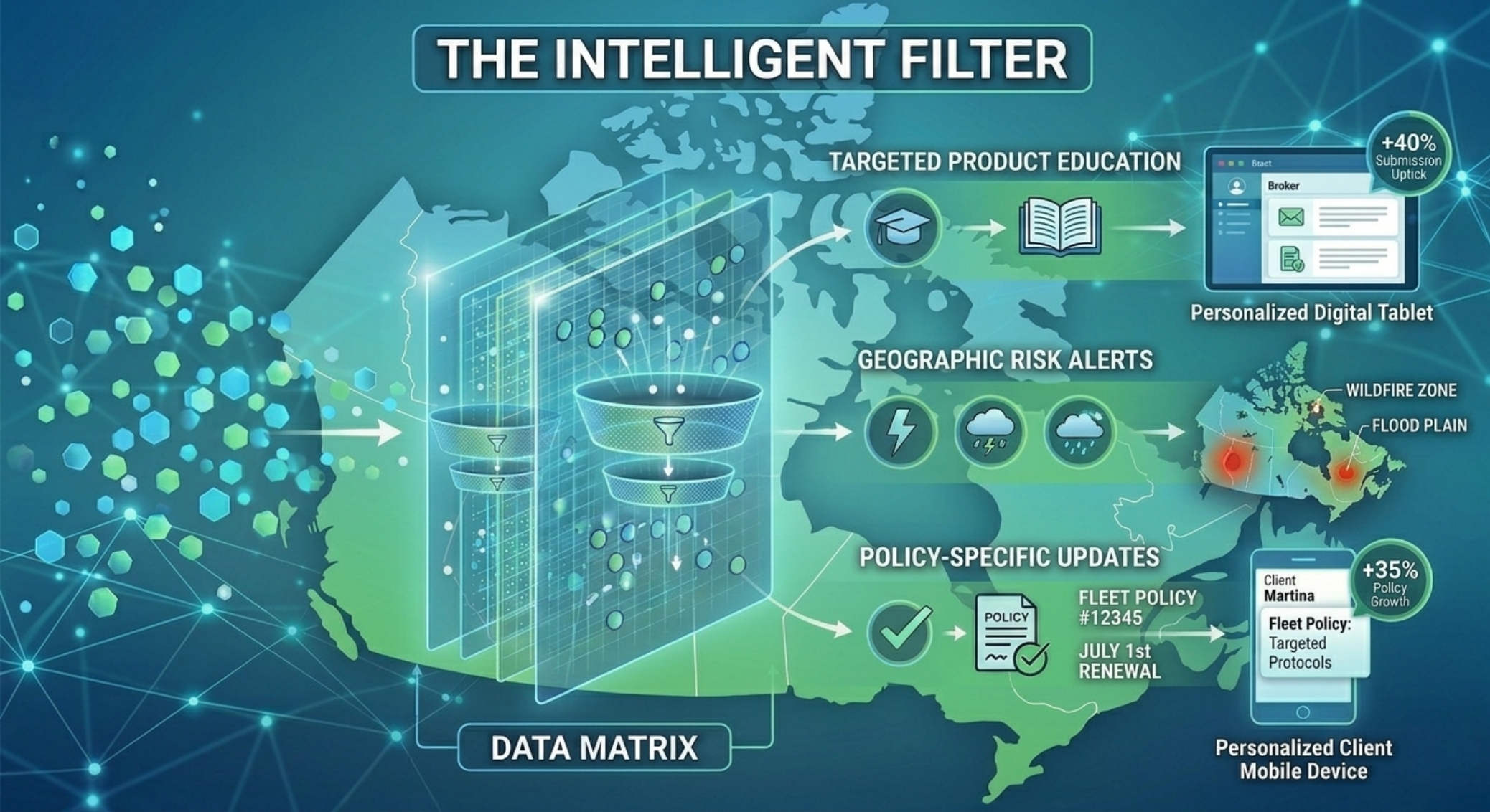
With the right data foundation in place, communications and campaigns are targeted, segmented and timed based on broker needs, product appetite, geography, and activity. This enables a more strategic approach to:
- Product and coverage education aligned to underwriting appetite
- Timely risk communication tied to geographic or industry-specific factors
- Proactive outreach based on submission patterns or gaps
The result is not more communication, but more relevant communication.
The Broker Advantage: Relevance at the Client Level
For brokers, personalization must extend beyond basic fields and into the full context of the client relationship. Modern Marketing Operations allow data from systems like BMS and CRM platforms to inform communications based on policies, risk profiles, claims history, and lifecycle timing and preferences.
This transforms outreach from generic messaging into meaningful engagement.
While there is a common perception that audiences don’t want more emails or content, the reality is more nuanced. The challenge is not volume, it’s relevance. Poor strategy, unfocused messaging, and attempts to solve too many pain points at once lead to disengagement. When communications and campaigns reflect the client’s actual situation and are designed with clear intent and clean data, the content or program becomes something worth consuming.
Important Tip: This is where smaller and mid-sized players can win faster. Larger organizations often face internal complexity, multiple stakeholders, and competing priorities that can turn a strong campaign into a diluted version of its original intent. More agile providers, with fewer constraints, can move quickly, stay focused, and execute with greater precision. That ability to act decisively is a meaningful advantage.
From Campaigns to Connected Growth
The most impactful strategy in 2026 is the ability to deliver personalized campaigns at scale through a connected approach. This is where Co-Marketing, Co-Selling, and Co-Servicing align.
This approach moves beyond providing Co-marketing materials or Co-marketing campaigns and toward enabling outcomes. Campaigns, content, and tools are designed to work together, supporting education, guiding decisions, and connecting directly to quoting, binding, and servicing workflows.
At the center of this is data-driven personalization. Segmentation, triggers, and real-time inputs ensure that every interaction is relevant, timely, and actionable.
When executed well, a Co-marketing initiative becomes united in outcomes and not just something we tried. It becomes a driver of growth, increasing new business, improving adoption of products and tools, and strengthening the overall customer experience.
From Reactive to Proactive
Goose Digital works with insurance organizations to operationalize this shift. By activating data through platforms like HubSpot, Salesforce, Act-On and others, we help transform fragmented communications and campaigns into coordinated growth strategies.
The result is a move from reactive service to proactive engagement, where every communication has a purpose and every campaign supports a measurable outcome.
Sources
Sources are not provided for this content, as it is based on widely accepted information.
Content Integrity
This article was generated with the assistance of AI and edited by a human team member.